Stinging insect nest extraction in San Diego demands precise species identification and architectural evaluation. In coastal valleys like Mission Hills, Point Loma, and La Jolla, marine layer moisture accelerates paper…
Stinging insect nest extraction in San Diego demands precise species identification and architectural evaluation. In coastal valleys like Mission Hills, Point Loma, and La Jolla, marine layer moisture accelerates paper wasp attachment beneath coastal wood trims, rafter tails, and stucco overhangs. In hotter inland pockets such as Scripps Ranch and Carmel Valley, aggressive western yellowjackets systematically colonize subterranean rodent burrows, utility valve boxes, and hollow cinder block garden walls. Ground nests present distinct hazards because lawn equipment or foot traffic along property lines can trigger mass defensive stinging within a 20-foot perimeter. Structural wall voids require localized thermal imaging rather than random drilling, pinpointing the brood comb behind drywall or wood siding to prevent secondary infestations of carpet beetles and honey decomposition.
Selecting physical extraction over broadcast aerosol spraying protects household safety and structural integrity. Leaving dead colonies sealed inside soffits or vent chases allows unattended pupae, honey, or protein stores to rot, attracting secondary household scavengers such as Argentine ants, dermestid beetles, and roof rats. Full extraction completely eliminates the physical nest mass, discards biological waste in airtight poly receptacles, and coats the anchorage point with specialized enzymatic cleaners to neutralize lingering colony pheromones that draw successor queens the following spring. Families with companion animals or young children in North Park, Clairemont, Hillcrest, and Pacific Beach benefit from focused botanical compounds derived from essential plant oils and targeted micro-dusted contact barriers, which eliminate reliance on widespread organophosphates, indoor air contamination, or mandatory family evacuation.
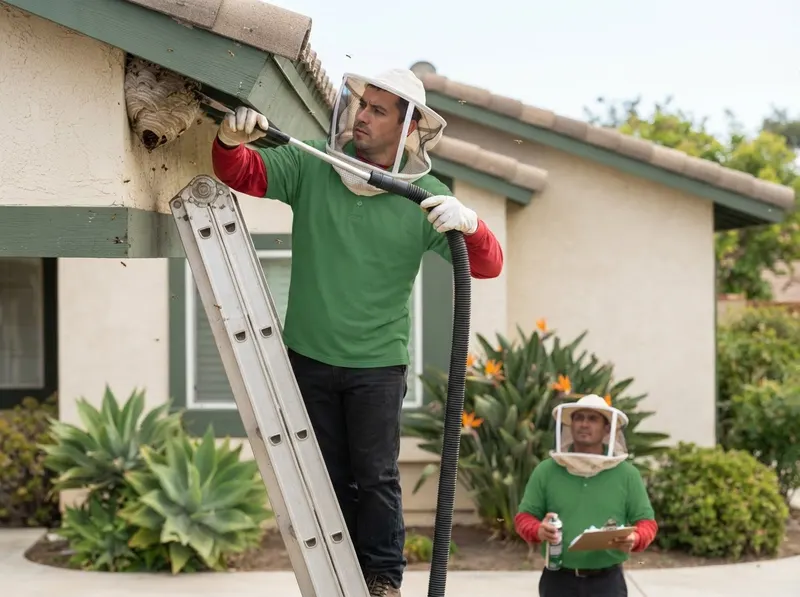
Execution requires structured step-by-step containment. 1. The specialist establishes a 25-foot safety buffer and identifies entry thresholds using directional listening probes. 2. The technician dons a sealed 3-layer protective mesh bee suit and introduces direct-injection, low-toxicity aerosol freeze or botanical contact sprays into the primary vent opening. 3. Mechanical tools dislodge the paper or mud comb, followed by HEPA-filtered capture to recover residual workers. 4. The void is thoroughly vacuumed and cleared of debris. 5. Entry voids are sealed using heavy-gauge copper mesh or stainless steel insect screening. For aerial hornets nested in open brush or mature eucalyptus, immediate pole-mounted extraction resolves the risk, whereas concealed colonies inside plumbing chases trade direct line-of-sight access for limited, non-invasive sheetrock access panels.
Every job gets a firm, written price after a free on-site visit.
Tell us about your stinging insect nest extraction job in San Diego and we'll send a clear, written quote, usually the same day.
 ClearNest Pest Control