Drywood termites trigger consistent structural wear across San Diego County, particularly within coastal structures in Ocean Beach, Pacific Beach, Point Loma, and La Jolla where marine fog cycles soften exposed rafter…
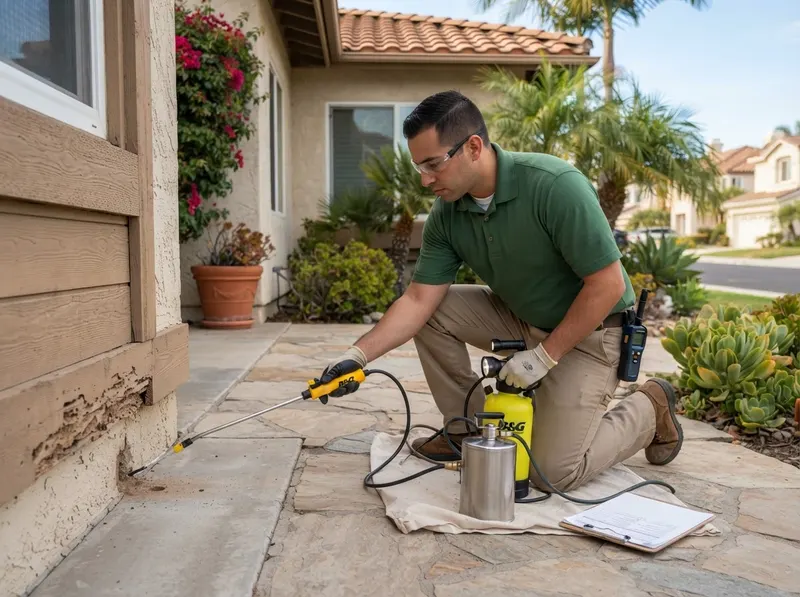
Drywood termites trigger consistent structural wear across San Diego County, particularly within coastal structures in Ocean Beach, Pacific Beach, Point Loma, and La Jolla where marine fog cycles soften exposed rafter tails and fascia boards. In older Craftsman framing throughout North Park and Mission Hills, western drywood alates emerge during warm September Santa Ana winds, dropping distinctive hexagonal fecal pellets beneath baseboards and window stools. Localized treatment targets these isolated gallery pockets directly using precision micro-injections of non-repellent termiticides or localized botanical active ingredients. This approach avoids whole-home structural sulfuryl fluoride fumigation, meaning occupants and indoor pets do not vacate the residence, food products stay in pantries, and roof tiles remain undisturbed by exterior tarps.
Subterranean termite activity differs across inland valley corridors such as Scripps Ranch, Carmel Valley, and Clairemont, where soil moisture gradients beneath foundations allow Reticulitermes hesperus to construct mud shelter tubes over stem walls and plumbing penetrations. Localized treatment for subterranean colonies involves precision sub-slab injection or localized perimeter soil barrier application, sealing ingress pathways without broadcast chemical spraying. The trade-off between localized intervention and whole-structure fumigation centers on colony distribution: localized spot treatment is ideal for contained, accessible infestations within discrete framing members, whereas hidden, multi-story structural colonization throughout unreachable wall voids may necessitate whole-house encapsulation.
Technicians follow a calibrated four-step execution sequence. First, visual tactile sounding using acoustic mallets and optical moisture meters pinpoints hollow timbers and active moisture sources. Second, technician drilling creates 1/8-inch entry ports directly into active drywood galleries or subterranean entry channels. Third, calibrated equipment applies low-toxicity non-repellent transfer agents directly into the timber void under low pressure, ensuring the active material spreads across grooming workers without aerosolizing into interior living air. Fourth, injection holes are sealed with matching timber plugs, and all baseline frass is vacuumed to establish a clean monitoring plane for follow-up verification.
Every job gets a firm, written price after a free on-site visit.
Tell us about your termite inspection & localized treatment job in San Diego and we'll send a clear, written quote, usually the same day.
 ClearNest Pest Control